From Server Rooms to the Cloud: How Business IT Has Changed
From Server Rooms to the Cloud: How Business IT Has Changed
Explore the evolution of business servers, from bulky on-site hardware to modern cloud hosting solutions, and learn how today’s businesses can reduce costs, improve flexibility, and stay secure.
From Mainframes to Modern Business IT
For decades, servers have been the backbone of business technology. Long before cloud computing, remote work, and mobile apps, organizations relied on massive physical systems to store files, run software, and keep operations moving.
Today, the technology looks very different, but the purpose remains the same. Businesses still need reliable, secure systems that keep employees connected and data protected. What has changed is how those systems are delivered.
At KSP Technology, we help Saskatchewan businesses navigate that shift every day. Understanding how servers evolved helps explain why modern cloud solutions have become such an attractive option.
The Early Days: Mainframes and Centralized Computing
In the 1950s and 1960s, servers looked nothing like the compact systems businesses use today.
Large organizations relied on “mainframes” — room-sized computers that handled calculations, data processing, and internal business operations. These systems were expensive, required specialized staff, and consumed enormous amounts of power and cooling.
Only governments, universities, and major corporations could realistically afford them.
As technology advanced through the 1970s and 1980s, smaller “minicomputers” and eventually rack-mounted servers became more accessible to businesses.
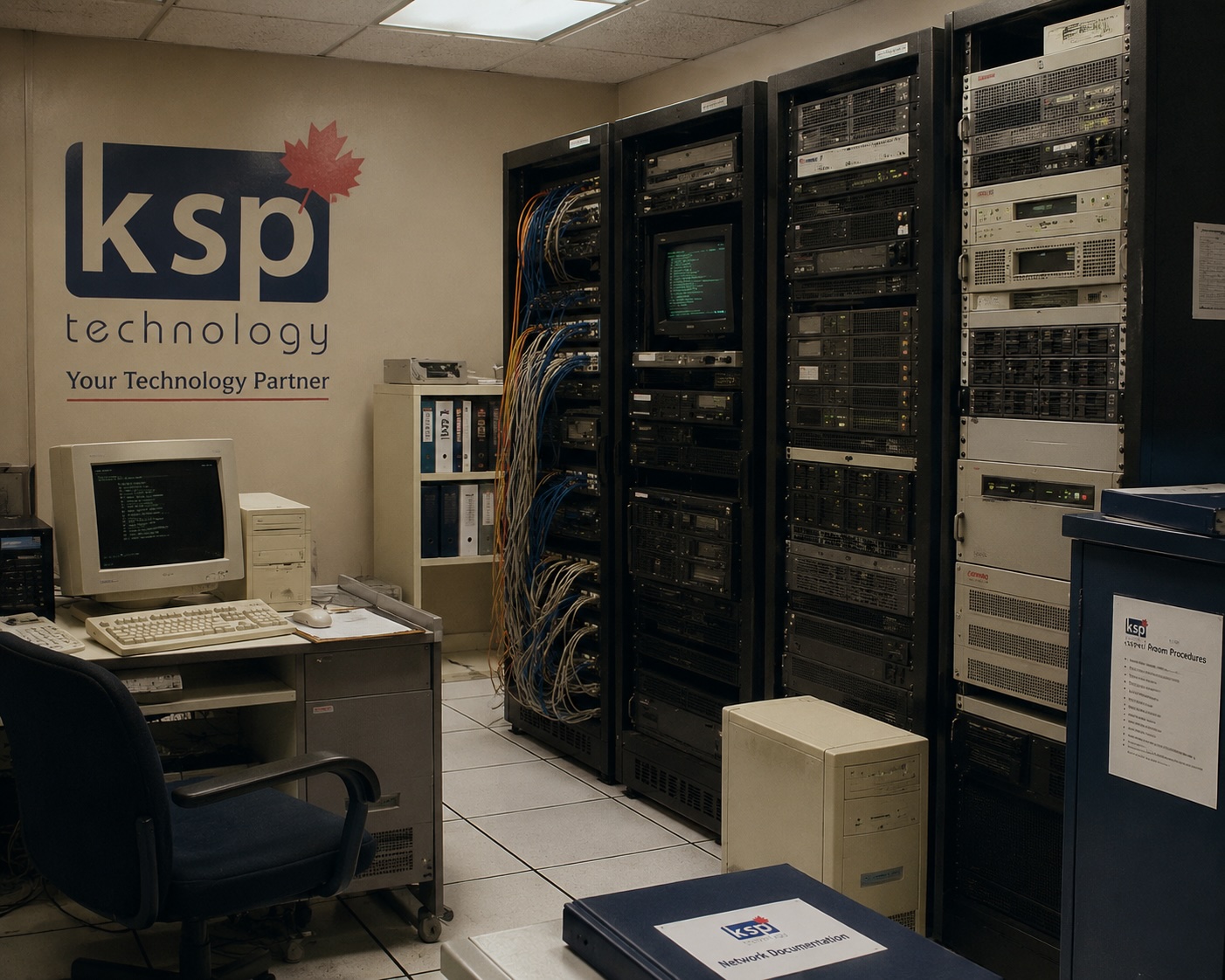
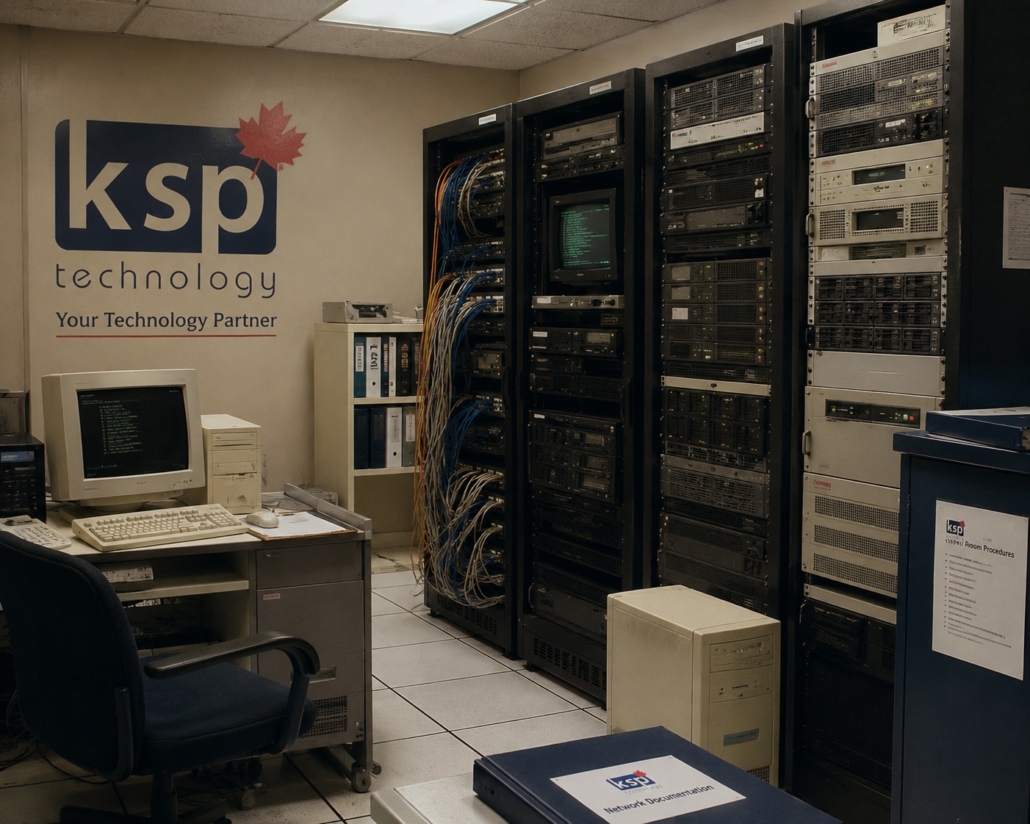
This led to the rise of the traditional server room:
Physical servers stored onsite.
Dedicated cooling and power systems
In-house IT teams managing hardware
Businesses purchase equipment every few years
For many companies, owning servers became a standard part of doing business.
The Rise of Virtualization
In the early 2000s, virtualization changed everything.
Instead of running one application per physical server, businesses could run multiple “virtual servers” on a single machine. This dramatically improved efficiency and reduced hardware waste.
Virtualization helped businesses:
- Lower hardware costs
- Reduce power consumption
- Simplify backups and disaster recovery
- Scale systems more efficiently
- Improve uptime and reliability
This technology laid the groundwork for modern cloud infrastructure.
Enter the Cloud
Cloud hosting took virtualization one step further.
Instead of businesses owning and maintaining physical servers themselves, cloud providers began hosting infrastructure in large-scale data centres.
Businesses could now:
- Access systems remotely
- Scale resources as needed
- Reduce upfront hardware costs
- Improve disaster recovery
- Support hybrid and remote work
For many organizations, this eliminated the need for expensive on-site server rooms entirely.
Modern cloud environments can still provide the same applications and file access employees rely on — but without the burden of maintaining aging hardware.
Why Businesses Are Moving Away from Traditional Servers
Physical servers still have a place in some environments, especially where specialized software, compliance requirements, or manufacturing systems are involved.
But for many small and mid-sized businesses, maintaining on-site infrastructure has become increasingly difficult.
Common challenges include:
Rising Hardware Costs. Modern servers are significantly more expensive than they were even five years ago.
Difficulty Finding Replacement Parts. Supply chain shortages and component delays have made upgrades and repairs slower and more expensive.
Security Risks. Older systems often lack modern security protections and become vulnerable over time.
Power and Cooling Expenses. Servers generate heat and require stable power infrastructure, adding operational costs.
Limited Scalability. Adding users, storage, or performance often requires additional hardware purchases.
Cloud-hosted infrastructure addresses many of these concerns while giving businesses greater flexibility.
The Modern Approach: Flexible IT Infrastructure
Today, businesses have more options than ever before.
Some organizations choose fully cloud-hosted environments. Others use hybrid systems that combine onsite hardware with cloud services.
The right solution depends on:
- Your business size
- Security and compliance needs
- Software requirements
- Remote work demands
- Growth plans
- Budget priorities
At KSP, we help businesses design infrastructure that fits their operations today while preparing for tomorrow.
That may mean replacing aging servers, moving workloads to the cloud, or building a hybrid environment that balances performance, cost, and security.
Servers have evolved dramatically over the last several decades.
What once required an entire room of hardware can now be delivered securely through modern cloud infrastructure hosted right here in Canada.
For businesses, the biggest shift is no longer just about technology; it’s about flexibility, predictability, and reducing risk.
The question is no longer “Do we need servers?” It’s “What’s the smartest way to deliver reliable IT for our business?”
That’s where having the right IT partner makes all the difference.